Renting office space is one of the most important decisions a business can make, especially in a fast-growing and densely populated city like Dhaka. The capital of Bangladesh is not just the political center of the country but also its economic engine, attracting startups, multinational companies, SMEs, and entrepreneurs alike. With this rapid growth comes intense competition for commercial spaces, rising rental costs, and a wide range of options that can easily overwhelm decision-makers.
Choosing the wrong office space is more than just an inconvenience. It can quietly drain your finances, reduce employee productivity, damage your brand image, and even limit your company’s future growth. Many businesses, particularly those renting for the first time, make avoidable mistakes that cost them heavily in the long run. From overlooking hidden costs to failing to plan for scalability, these missteps often stem from a lack of proper research and strategic thinking.
This guide explores the seven most common mistakes businesses make when renting office space in Dhaka and, more importantly, how you can avoid them. Whether you are a startup looking for your first office or an established company planning to relocate, understanding these pitfalls will help you make a smarter, more informed decision.
Understanding the Office Rental Landscape in Dhaka
Before diving into the mistakes, it’s important to understand how Dhaka’s office rental market works. The city is divided into several key commercial zones, each offering different advantages and price points. Areas like Gulshan and Banani are considered premium business districts, home to embassies, corporate headquarters, and high-end office buildings. Renting in these locations can significantly boost your brand image, but it also comes with a higher price tag.
On the other hand, areas like Motijheel have traditionally served as the financial heart of the city. While still important, some businesses are gradually shifting away from older commercial zones due to infrastructure limitations and traffic congestion. Emerging areas and secondary locations may offer more affordable options, but they may lack the prestige or accessibility of prime districts.
The rental market in Dhaka is influenced by several factors, including demand, infrastructure, road connectivity, and proximity to key institutions. Additionally, businesses must choose between traditional office leases and flexible co-working spaces, each with its own advantages and drawbacks. Understanding these dynamics is crucial because it sets the foundation for avoiding costly mistakes.
Mistake #1: Ignoring Hidden Costs
One of the most common and damaging mistakes businesses make is focusing solely on the base rent while ignoring the full cost of occupying an office. In Dhaka, the advertised rent often represents just a portion of the total expense. Additional costs such as service charges, maintenance fees, utility bills, generator costs, parking fees, and security expenses can significantly increase your monthly outlay.
For example, a seemingly affordable office in a prime location may become expensive once you factor in electricity charges during frequent power usage, especially if air conditioning and heavy equipment are involved. Buildings with backup generators often charge extra for fuel and maintenance, which can add up quickly.
Failing to account for these hidden costs can disrupt your budget and create financial strain over time. To avoid this mistake, always request a detailed breakdown of all expenses before signing any agreement. Ask specific questions about what is included in the rent and what is billed separately. A transparent understanding of the total cost will help you make a more accurate comparison between different properties.
Mistake #2: Choosing the Wrong Location
Location is not just about where your office is situated; it directly affects your business operations, brand perception, and employee satisfaction. Many businesses make the mistake of choosing a location based purely on cost, without considering accessibility, traffic conditions, and client convenience.
Dhaka is notorious for its traffic congestion, which can turn even a short commute into a time-consuming ordeal. An office located in a difficult-to-reach area may lead to frequent delays, reduced productivity, and frustration among employees. Clients and partners may also find it inconvenient to visit, which can impact business relationships.
At the same time, choosing a prestigious location like Gulshan or Banani without evaluating whether it aligns with your business needs can also be a mistake. While these areas offer excellent visibility and infrastructure, they may not always provide the best value for every type of business.
The key is to strike a balance between affordability, accessibility, and brand positioning. Consider where your employees live, how your clients will reach you, and whether the location supports your long-term goals. A well-chosen location can enhance efficiency and strengthen your professional image.
Mistake #3: Not Reviewing the Lease Agreement Carefully
The lease agreement is a legally binding document that defines your rights and responsibilities as a tenant. Unfortunately, many businesses either skim through this document or rely on verbal assurances from landlords, which can lead to serious problems later.
Lease agreements in Dhaka often include clauses related to rent escalation, lease duration, renewal terms, security deposits, and exit conditions. If these terms are not clearly understood, you may find yourself locked into an unfavorable contract. For instance, some agreements include automatic rent increases at fixed intervals, which can significantly impact your long-term budget.
Another critical aspect is the exit clause. Without a clear termination policy, leaving the office before the lease ends can result in penalties or loss of your security deposit. Similarly, restrictions on modifications or renovations can limit your ability to customize the space according to your needs.
To avoid these risks, take the time to thoroughly review every clause in the agreement. It is highly advisable to consult a legal expert who can identify potential red flags and ensure that your interests are protected. A well-understood contract is the foundation of a secure and hassle-free tenancy.
Mistake #4: Underestimating Infrastructure Needs
Infrastructure plays a crucial role in the day-to-day functioning of your business, yet it is often overlooked during the decision-making process. Many businesses focus on aesthetics and location while neglecting essential facilities such as electricity, internet connectivity, water supply, and parking.
In a city like Dhaka, where power outages and connectivity issues can occur, having reliable infrastructure is non-negotiable. An office without a proper backup power system can disrupt operations and lead to downtime. Similarly, slow or unreliable internet can affect communication, productivity, and customer service.
Parking is another critical factor, especially if your employees or clients rely on private vehicles. Limited parking space can create inconvenience and negatively impact your overall experience.
Before finalizing any office, visit the property during working hours to assess real-time conditions. Check the availability of backup power, test internet connectivity, and observe how the building operates on a typical day. Ensuring that the infrastructure meets your requirements will save you from operational challenges later.
Mistake #5: Skipping Legal Verification
Legal verification is one of the most important steps in renting office space, yet it is often neglected due to time constraints or overconfidence. In Dhaka’s competitive real estate market, cases of fraud, disputed ownership, and unauthorized rentals are not uncommon.
Renting a property without verifying ownership documents can expose you to significant risks, including legal disputes and eviction. Additionally, not all buildings are approved for commercial use, and operating an office in a non-compliant space can lead to fines or shutdowns.
To avoid these issues, always verify the landlord’s ownership documents and ensure that the property is legally approved for commercial purposes. Cross-check information with relevant authorities if necessary. Working with reputable real estate agents or legal advisors can also provide an added layer of security.
Taking the time to complete proper due diligence may seem tedious, but it is far less costly than dealing with legal complications later.
Mistake #6: Overlooking Accessibility and Commute
Employee satisfaction is closely linked to how easily they can commute to the office. Many businesses overlook this factor, assuming that employees will adapt to any location. However, long and stressful commutes can lead to decreased productivity, higher absenteeism, and increased turnover.
Dhaka’s transportation system is complex, with varying levels of access to public transport across different areas. An office that is not well-connected by buses or other transport options may limit your ability to attract and retain talent.
Accessibility also affects your clients and partners. If visiting your office becomes inconvenient, it may discourage in-person meetings and weaken professional relationships.
Before finalizing a location, consider conducting a simple survey among your employees to understand their commuting preferences. Evaluate nearby transport options, road conditions, and travel times during peak hours. Choosing a location that is convenient for both employees and clients can significantly improve overall satisfaction and efficiency.
Mistake #7: Not Planning for Future Growth
Many businesses make the mistake of choosing an office that meets their current needs without considering future expansion. While it may seem cost-effective to rent a smaller space initially, outgrowing your office within a short period can create unnecessary disruption and additional expenses.
Relocating an office involves costs related to moving, setup, and potential downtime. It can also affect employee morale and productivity. Additionally, terminating a lease early may result in financial penalties.
To avoid this mistake, think ahead and consider your business growth over the next two to three years. Choose a space that offers some level of scalability, whether through additional rooms, flexible layouts, or the option to expand within the same building.
Planning for the future ensures that your office remains a supportive environment for growth rather than a limiting factor.
Conclusion
Renting office space in Dhaka is a significant investment that requires careful planning, research, and attention to detail. The city offers a wide range of opportunities, but it also presents unique challenges that can catch businesses off guard.
By avoiding common mistakes such as ignoring hidden costs, choosing the wrong location, neglecting lease agreements, underestimating infrastructure, skipping legal verification, overlooking accessibility, and failing to plan for growth, you can make a more informed and strategic decision.
An office is more than just a physical space; it is the foundation of your daily operations, your brand identity, and your future success. Taking the time to evaluate your options thoroughly and approach the process with a clear strategy will help you secure a workspace that truly supports your business goals.
Related Blogs
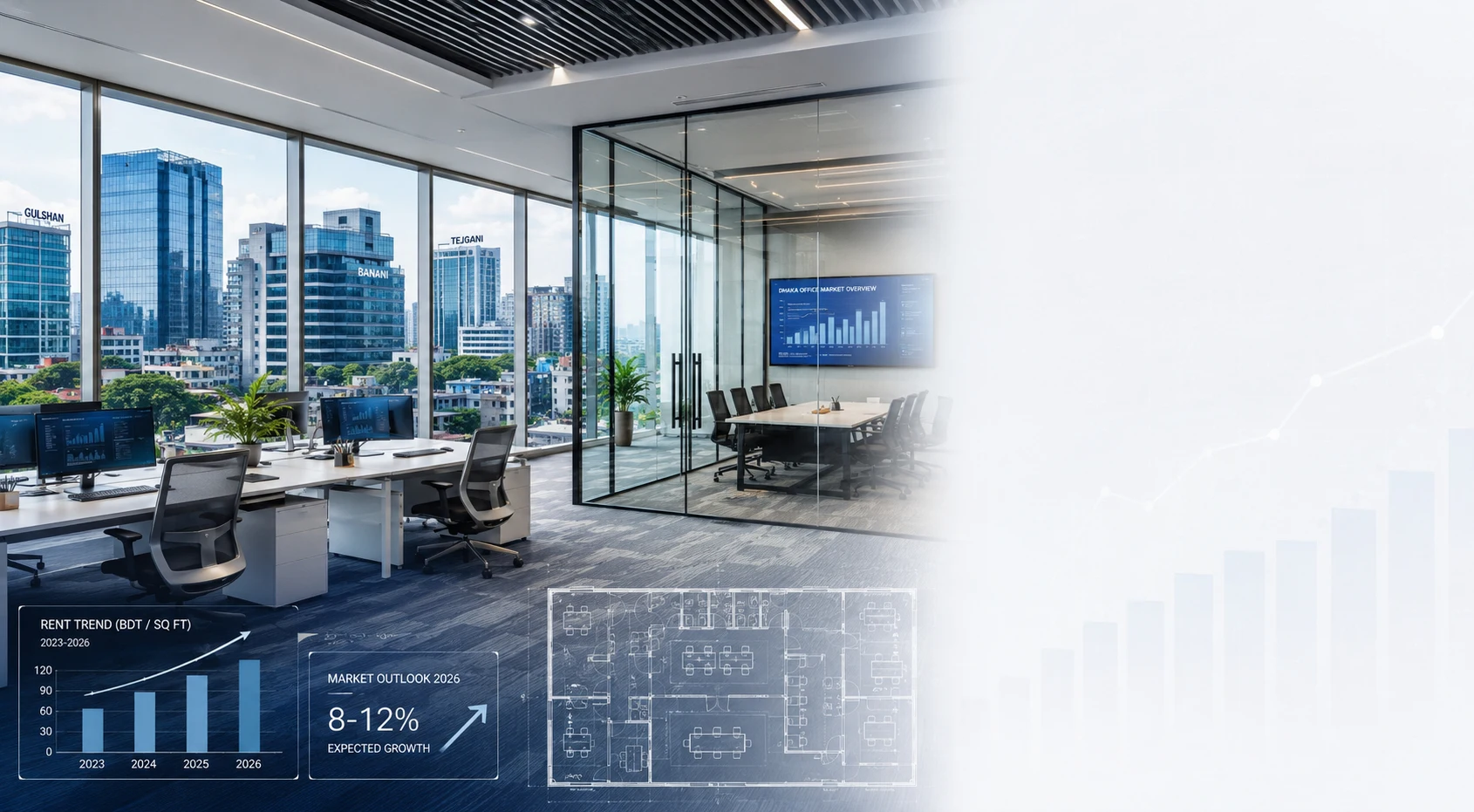
Office Rent Per Square Foot in Bangladesh 2026: Complete Com...
The commercial real estate market in Bangladesh continues to evolve rapidly in 2026. As businesses expand, startups emerge, and multinational companies increase their presence, demand for...
Continue Reading