Hidden Costs of Renting Office Space in Gulshan: What Businesses Should Know
Real Estate,Rental Tips 1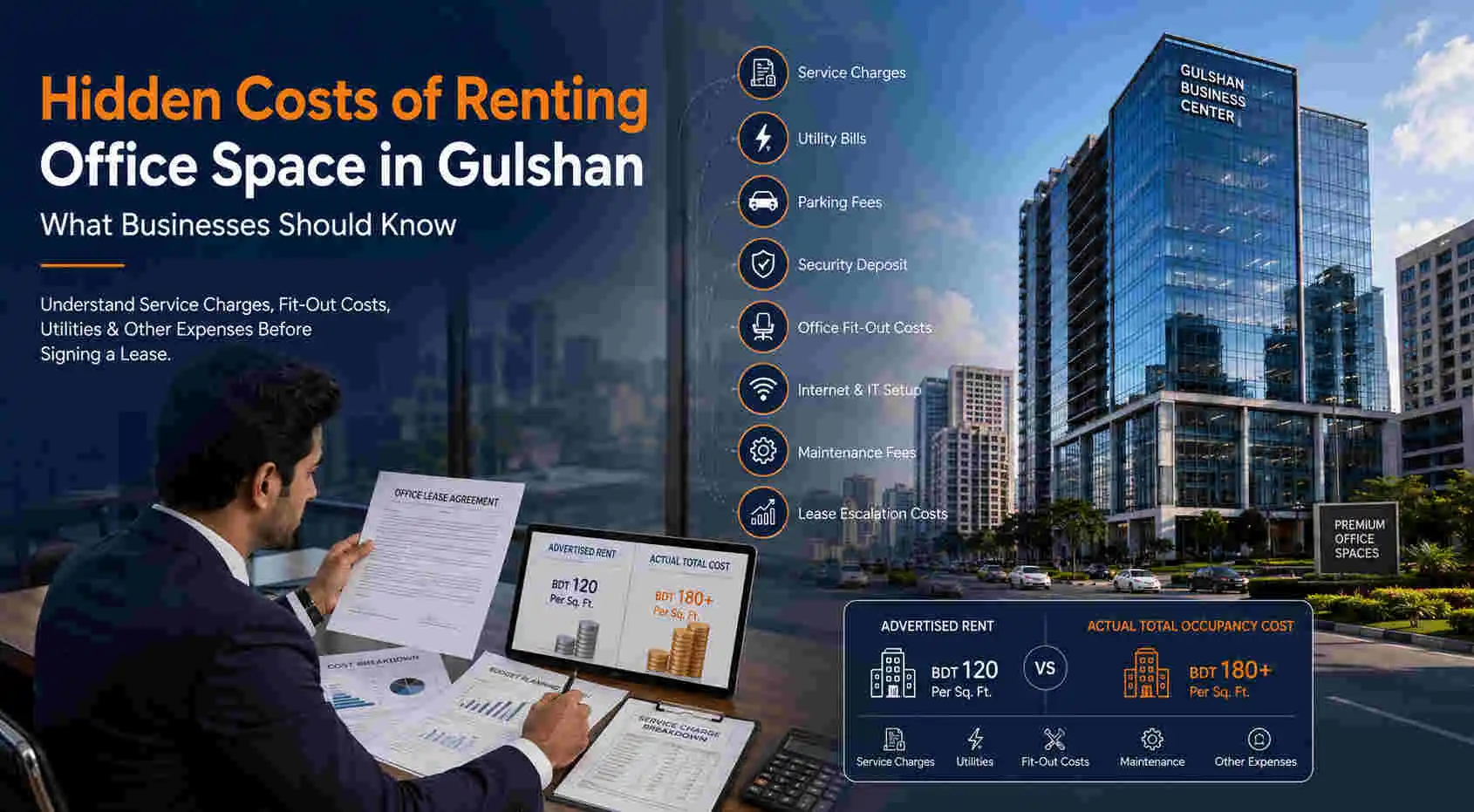
Gulshan is widely recognized as Dhaka’s premier business district. Home to multinational companies, financial institutions, embassies, and corporate headquarters, the area offers a prestigious business address and access to modern office infrastructure.
However, many businesses make the mistake of evaluating office space based solely on the quoted monthly rent. While rent is certainly a major expense, it is often only one part of the total cost of occupying an office.
From service charges and parking fees to fit-out expenses and lease escalation clauses, several hidden costs can significantly increase your overall office budget. In some cases, the total occupancy cost may be 15% to 40% higher than the advertised rental rate.
Before signing an office lease in Gulshan, it is essential to understand these additional expenses and calculate the true cost of renting office space.
This guide explains the most common hidden office rental costs businesses should know before making a decision.
What Are the Hidden Costs of Renting Office Space?
Hidden office rental costs are additional expenses beyond the monthly rent that businesses must pay to operate from a commercial office. These costs often include service charges, utility bills, parking fees, office fit-out expenses, internet installation, security deposits, maintenance fees, and annual rent increases. Understanding these costs helps businesses create a realistic office budget and avoid unexpected financial pressure.
Service Charges Can Significantly Increase Monthly Costs
One of the most overlooked expenses when renting office space in Gulshan is the service charge.
Many commercial buildings quote rent separately from building management fees. As a result, businesses may assume the office is more affordable than it actually is.
Service charges commonly cover:
-
Building maintenance
-
Security services
-
Common area cleaning
-
Elevator maintenance
-
Generator operation
-
Reception services
-
Facility management
While these services are valuable, they can substantially increase monthly occupancy costs.
Before signing a lease, ask for a detailed breakdown of all service-related fees.
Utility Bills Are Often Higher Than Expected
Utilities can become a significant operational expense, particularly in larger office spaces.
Many tenants assume utility costs are included in rent, only to discover additional monthly charges after moving in.
Typical utility expenses include:
-
Electricity
-
Air conditioning
-
Water supply
-
Generator fuel charges
-
Waste management fees
Businesses with large teams, extended working hours, or intensive technology usage may experience higher utility bills than anticipated.
Are Utilities Included in Office Rent?
In most cases, utilities are not fully included in office rent. Businesses are typically responsible for electricity, internet, air conditioning usage, and other operational utility expenses unless specifically stated in the lease agreement.
Always clarify utility responsibilities before finalizing any office rental agreement.
Parking Fees Can Add Unexpected Expenses
Parking is often a hidden cost that businesses overlook during the office selection process.
In premium commercial districts such as Gulshan, parking spaces are valuable assets and may not always be included with office rent.
Businesses may need to pay additional fees for:
-
Employee parking
-
Executive parking
-
Visitor parking
-
Additional parking slots
If your company regularly hosts clients or has employees who drive to work, parking costs should be included in your office budget calculations.
Office Fit-Out and Interior Setup Costs
An empty office space may appear attractive because of its lower rental rate. However, many businesses underestimate the cost of preparing the space for daily operations.
Office fit-out expenses can include:
-
Glass partitions
-
Reception design
-
Workstations
-
Meeting rooms
-
Furniture
-
Flooring
-
Lighting
-
Branding elements
-
Electrical modifications
These costs can quickly become one of the largest expenses associated with office relocation.
Who Pays for Office Fit-Out Costs?
In most cases, tenants are responsible for office fit-out costs unless the landlord agrees to provide a fit-out allowance or a fully furnished office space.
Before renting an office, determine whether the space is furnished, semi-furnished, or unfurnished and budget accordingly.
Internet and IT Infrastructure Setup Costs
Modern businesses rely heavily on technology, communication systems, and internet connectivity.
Unfortunately, many organizations fail to account for technology setup expenses during the leasing process.
Common IT-related costs include:
-
Internet installation
-
Dedicated bandwidth connections
-
Network cabling
-
Server room setup
-
Access control systems
-
CCTV installation
-
Telecommunication systems
For technology companies, software firms, and customer service operations, these expenses can represent a significant investment.
Planning infrastructure requirements before moving into a new office can reduce delays and operational disruptions.
Security Deposits and Advance Rent Requirements
Another major financial commitment comes in the form of security deposits and advance rent payments.
Landlords often require:
-
Security deposits
-
Advance monthly rent
-
Reservation payments
These upfront expenses can impact cash flow, particularly for startups and growing businesses.
Although security deposits are generally refundable under lease terms, they still represent capital that cannot be used elsewhere during the lease period.
Businesses should carefully evaluate how these upfront payments affect overall financial planning.
Lease Escalation Clauses Can Increase Future Costs
Many businesses focus on current rent without considering future rent increases.
Commercial leases often contain escalation clauses that increase rental costs annually.
These increases may be based on:
-
Fixed annual percentages
-
Inflation adjustments
-
Market rental reviews
-
Contract-specific terms
A lease that appears affordable today may become significantly more expensive over time.
What Is a Lease Escalation Clause?
A lease escalation clause is a provision that allows the landlord to increase rent during the lease term according to predefined conditions stated in the rental agreement.
Understanding escalation terms is essential for long-term budget planning.
Relocation and Moving Expenses
Moving into a new office involves more than signing a lease and collecting keys.
Businesses must also budget for relocation expenses such as:
-
Equipment transportation
-
Furniture moving
-
Employee relocation support
-
Temporary storage
-
Packing materials
-
Moving contractors
In addition to direct expenses, companies should also consider productivity losses that may occur during the relocation process.
Proper planning can help minimize downtime and reduce disruption to business operations.
Common Area Maintenance (CAM) Charges
Some commercial buildings apply Common Area Maintenance (CAM) charges separately from rent.
CAM fees are used to maintain shared facilities within the building.
These costs may cover:
-
Lobbies
-
Hallways
-
Shared washrooms
-
Elevators
-
Landscaping
-
Building exterior maintenance
Although these expenses contribute to a better workplace environment, they should be included when calculating total occupancy costs.
Always ask whether CAM charges are included in rent or billed separately.
Insurance and Compliance Expenses
Depending on the building and business type, companies may also face additional compliance-related expenses.
Examples include:
-
Office insurance
-
Fire safety compliance
-
Equipment insurance
-
Employee safety requirements
While these costs may seem minor individually, they can add up over time.
Businesses operating in regulated industries should pay particular attention to compliance requirements before signing a lease.
How to Calculate the True Cost of an Office
The most effective way to avoid surprises is to calculate the total occupancy cost rather than focusing solely on rent.
Use the following checklist:
|
Cost Category |
Include in Budget? |
|
Monthly Rent |
Yes |
|
Service Charges |
Yes |
|
Utilities |
Yes |
|
Parking Fees |
Yes |
|
Internet Setup |
Yes |
|
Office Fit-Out |
Yes |
|
Security Deposit |
Yes |
|
CAM Charges |
Yes |
|
Relocation Costs |
Yes |
|
Future Rent Escalation |
Yes |
By evaluating all expenses together, businesses can compare office options more accurately and make informed decisions.
Office Lease Checklist Before Signing
Before committing to any office space in Gulshan, verify the following:
✔ Monthly rent confirmed
✔ Service charges clarified
✔ Utility responsibilities defined
✔ Parking availability confirmed
✔ Security deposit reviewed
✔ Rent escalation terms understood
✔ Internet availability checked
✔ Maintenance responsibilities clarified
✔ CAM charges identified
✔ Lease exit clauses reviewed
A detailed review today can prevent costly surprises later.
How Businesses Can Reduce Hidden Office Costs
Businesses can reduce overall office occupancy costs by:
-
Comparing multiple office options
-
Negotiating lease terms
-
Requesting transparent cost breakdowns
-
Choosing furnished office spaces when appropriate
-
Reviewing escalation clauses carefully
-
Planning office layouts efficiently
-
Evaluating long-term occupancy needs
Making decisions based on total value rather than rent alone often leads to better long-term outcomes.
Conclusion
Renting office space in Gulshan offers numerous advantages, including a prestigious business address, modern infrastructure, and access to a thriving corporate environment. However, businesses should never evaluate office space based solely on the advertised monthly rent.
Hidden costs such as service charges, utilities, parking fees, office fit-out expenses, security deposits, internet installation, and lease escalation clauses can significantly increase the true cost of occupancy.
By understanding these expenses in advance and conducting thorough lease reviews, businesses can create realistic budgets, avoid unexpected financial pressure, and make smarter office rental decisions.
A well-informed approach ensures that your next office space supports both operational efficiency and long-term business growth.
Frequently Asked Questions
What hidden costs should businesses consider when renting office space?
Businesses should consider service charges, utility bills, parking fees, office fit-out expenses, internet installation, security deposits, CAM charges, and lease escalation clauses.
Are service charges included in office rent?
Not always. Many commercial buildings charge service fees separately from the monthly rent.
How much security deposit is usually required for office space?
Security deposit requirements vary by landlord and lease terms, but businesses should expect a significant upfront payment before occupancy.
What is included in common area maintenance charges?
CAM charges typically cover shared spaces such as lobbies, elevators, hallways, landscaping, and general building maintenance.
Who pays for office fit-out costs?
In most situations, tenants are responsible for fit-out expenses unless otherwise agreed in the lease agreement.
How can businesses reduce office rental costs?
Comparing multiple office options, negotiating lease terms, understanding hidden expenses, and selecting suitable office configurations can help reduce overall occupancy costs.
Related Blogs
Office To Let in Dhaka – Find the Perfect Office Space for Y...
Finding the right office to let in Dhaka has become one of the biggest priorities for growing businesses, startups, agencies, and corporate companies. As Bangladesh’s commercial cap...
Continue Reading